Challenges of off-grid energy in rural Colombia and other LATAM countries
In Colombia, off-grid communities account for approximately 4% of the population but cover more than 50% of the national territory.
The isolated settlements, like rural villages, islands, or indigenous areas in remote regions like Chocó, La Guajira, and the Amazon, lack connection to the national electricity grid.
They therefore rely on self-generated power from diesel generators, kerosene, or renewable sources such as solar panels and microgrids to meet basic needs, such as lighting, cooling, and healthcare. This situation goes beyond Colombia and reflects the challenges in remote areas in other LATAM countries as well.
In the era of climate change, it’s not only about installing electricity in these areas, but clean electricity.
Currently, the deployment of clean electrification in remote areas requires multiple manual on-site surveys by teams travelling days by boat or on foot to map solar potential, terrain, and community needs using paper logs or basic GPS, making these field trips cost-intensive and time-consuming and risking not achieving the results as planned upfront.
Furthermore, inefficiencies in data collection result from handwritten notes and manual data transfer, as these are prone to errors.
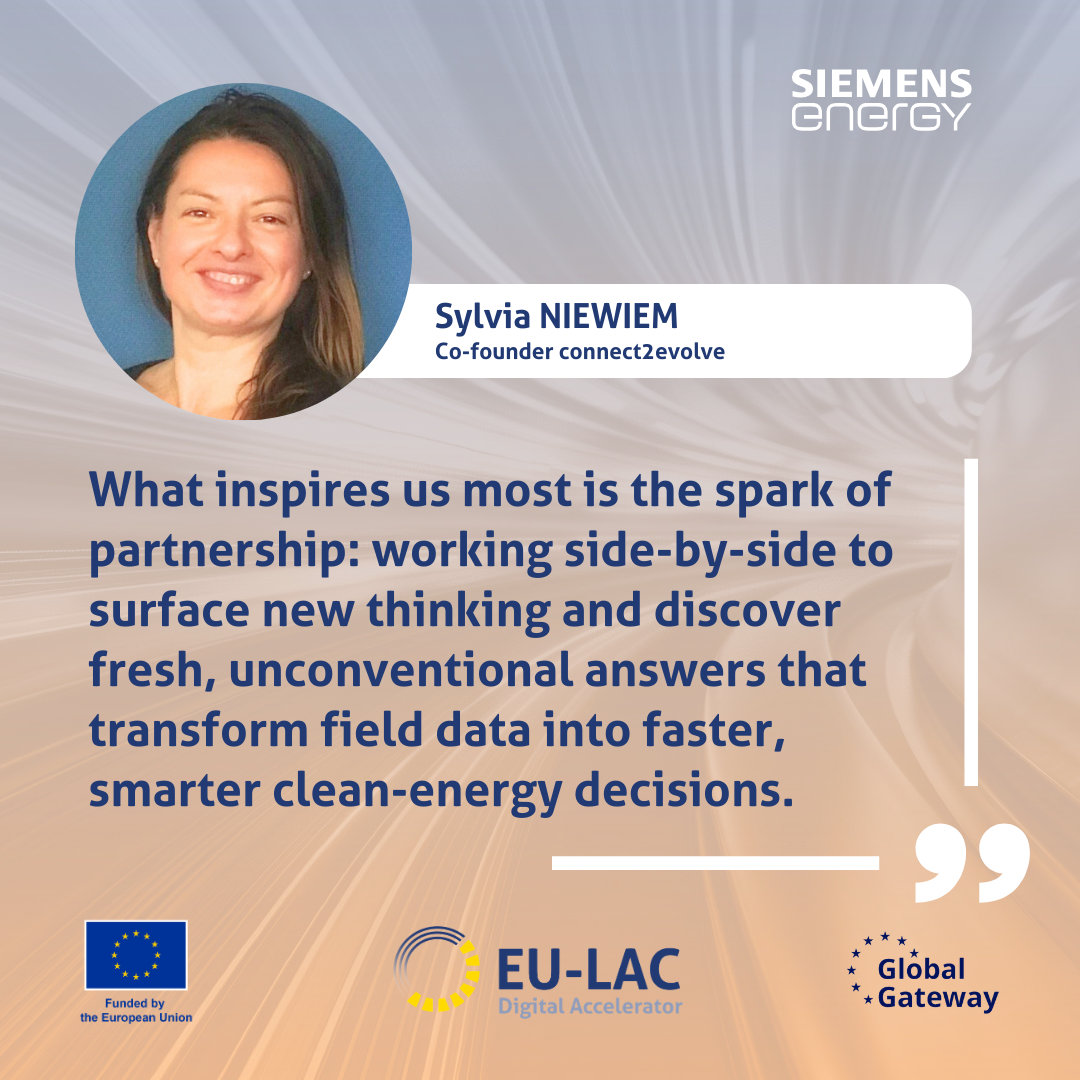
How to scale clean electrification in remote areas? That’s the challenge connect2evolve, an internal startup by Siemens Energy, faces.
From manual surveys to AI-driven electrification
Wimesa Media Technology is a German startup that designs AI-powered content-creation solutions and is developing an AI-driven application supporting connnect2evolve of Siemens Energy to enable scaling in remote areas.
The application will include the following features:
- Offline AI data capture via a mobile application with sensors and voice: enabling the collection of terrain photos and other data as well as conducting community interviews without an internet connection, with the data auto-processed locally.
- Auto-transcription, translation, and AI analysis of field inputs: Converts multilingual interviews and notes into organised datasets.
- Secure auto-sync and sharing in low-connectivity zones: Encrypts and uploads data when signal returns, enabling real-time team collaboration.
In summary, this results in increasingly accurate data, which will be included in the connect2evolve platform to streamline the electrification process and accelerate approvals for electrification projects and clean energy installations.
EU-LAC’s services: Turning a proof of concept (PoC) into an industrial capability
- Service n°1: PoC Design & Prototyping
The PoC Design & Prototyping service provides a structured pilot plan that allows key business hypotheses to be validated through clear and aligned metrics and objectives.
Milestones include PoC design, PoC validation and a final report confirming success criteria for scaling and de-risking.
- Service n°2: Scaling of solution
The scaling service analyses the feasibility of scaling the solution comprehensively, assessing the scale of deployment, technical and operational risks, and financial and geographical viability. This service translates PoC learnings into a clear, actionable scaling roadmap.
- Service n°3: International growth & Soft landing
The International growth & soft landing service includes an analysis of market opportunities by identifying priority markets, entry barriers, key opportunities, and best practices to support future commercialisation and sustainable market entry.
This results in clear gains in smart data collection and customer satisfaction.